Industry
Part of Privacy-safe family profiles compared with the default of publishing everything
Privacy-safe family profiles announcements: the directory, with corrections
A working directory of privacy-safe family profile announcements, the test each entry passes, and the corrections log that keeps published entries honest.
A family profile announcement is a public record of a household. The privacy-safe version publishes the category of news and withholds the identifiers.
This is the directory of privacy-safe family profile announcements we work from, the test each entry passes, and the corrections log for entries already published. Six entry types and six published announcements carry the specifics.
What to take away
- An entry qualifies only when its source is a document or a named office, never a secondhand account.
- Corrections run in the same slot as the original entry, with the date and what changed.
- A rumor that has been denied stays in the log until the denial is indexed alongside it.
- No entry carries a minor's school, address, or health detail, whatever the source offers.
- Named cases do the work herethe Buckingham Palace notice for Prince George, the Sussexes' Instagram post for Archie, Beyoncé's Tumblr post of the Blue Ivy photographs, and Illinois's child influencer trust law.
The directory: six entry types and six announcements
Six entry types cover nearly everything this desk publishes. Each has a source, a test, and a standing reason it is on the list. Six published announcements show the types in use.
Six entry types and their tests
Entry type
- Birth registration
- Vital records office
- Natality context
- CDC/NCHS natality files
- Name filing
- County court, USPTO
- Adoption access
- GA, IL, MA, CA rules
- Child influencer earnings
- State trust-account statutes
- Blended-family change
- Court filing or statement
Source
- Birth registration
- Registration number confirmed
- Natality context
- Aggregate context only
- Name filing
- Filing date and jurisdiction
- Adoption access
- Access procedure named
- Child influencer earnings
- Statute named
- Blended-family change
- Sourcing stated
Test
- Birth registration
- Primary record behind it
- Natality context
- Rate without naming family
- Name filing
- Filed vs announced name
- Adoption access
- Where procedure is published
- Child influencer earnings
- Income is the child's
- Blended-family change
- Prevents step-relation as birth
Why listed
- Birth registration
- Natality context
- Name filing
- Adoption access
- Child influencer earnings
- Blended-family change
The directory
| Entry | Source document or authority | The test it passes | Why it is listed |
|---|---|---|---|
| Birth registration | State vital records office, county clerk | Registration number confirmed, date matched to the filing | The only birth claim with a primary record behind it |
| Natality context | CDC National Vital Statistics System natality files | Aggregate use only, and small-area detail is withheld in the public-use file | Gives a rate without naming a family |
| Name filing | County court filing, USPTO trademark application, TSDR record | Filing date, jurisdiction and status stated, filed or withdrawn | Distinguishes a filed name from an announced one |
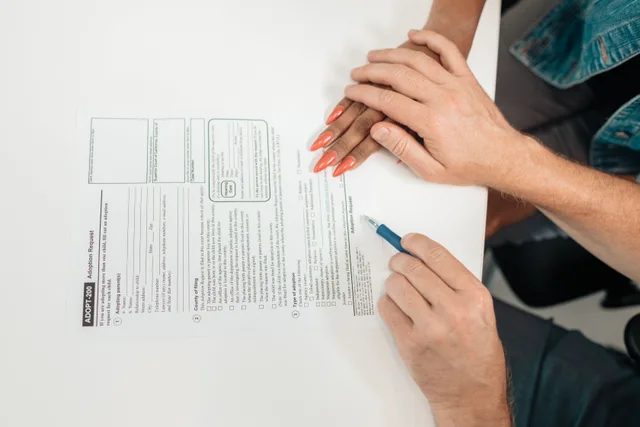
| Adoption access | Georgia, Illinois, Massachusetts, California adoption-record rules | Access procedure named, never the record | Tells readers where the procedure is published |
| Child influencer earnings | State trust-account statutes, including Illinois Public Act 103-0556 | Statute named, compliance referred to counsel | The household's income is the child's, and the statute says so |
| Blended-family change | Court filing or the family's own statement | Sourcing stated in the entry | Prevents a step-relation being reported as a birth |
| Prince George's birth, July 22, 2013 | Framed notice displayed at Buckingham Palace, Kensington Palace statement | Weight and time of birth given, no photograph, no address | Shows how a palace notice satisfies a birth claim |
| Archie Mountbatten-Windsor's birth, May 6, 2019 | The Duke and Duchess of Sussex's @sussexroyal Instagram account | Sex and weight given on the day, name and photograph withheld | The name arrived two days later, on May 8, 2019 |
| Blue Ivy Carter's first photographs, February 2012 | Beyoncé's Tumblr post | Self-published, no rights sold to a magazine | Kills the paid-photo story at the source |
| No Kids Policy, 2014 | Kristen Bell and Dax Shepard's public pledge | A campaign, not a statute, and labelled as one | Tells readers what the pledge asks of outlets |
| Illinois child influencer trusts, Public Act 103-0556 | Illinois statute, effective July 1, 2024 | Trust share tied to the minor's share of the content | Names the statute and sends compliance questions to counsel |
| France's children's image rights law, February 19, 2024 | Loi 2024-120 | Court-ordered removal, transfer of image rights in serious cases | The clearest statutory route in the directory |
The framed notice displayed at Buckingham Palace for Prince George on July 22, 2013 gave the weight, 8 lb 6 oz, and the time of birth. No photograph appeared that day, and no address ever did. Kensington Palace had already named St Mary's Hospital in London, because the family would be seen arriving.
The Duke and Duchess of Sussex announced the birth of their son on their @sussexroyal Instagram account on May 6, 2019: a boy, 7 lb 3 oz. No name and no photograph came with the post. Archie Harrison Mountbatten-Windsor followed on May 8, 2019.
Beyoncé posted the first photographs of Blue Ivy Carter on her Tumblr in February 2012, with a short statement asking readers to respect the family's privacy. Nothing was sold to a magazine. That is why the entry reads self-published.
Kristen Bell and Dax Shepard launched the No Kids Policy in 2014, asking outlets to stop running photographs of celebrity children taken without consent. It is a private pledge, not a statute, and the entry labels it that way.
Illinois Public Act 103-0556 took effect on July 1, 2024. It entitles a minor who appears in monetized content to a share of gross earnings, held in trust, and the share rises with how much of the content the minor appears in.
California's Coogan Law, in force since 1939, set the older pattern for child performers: 15 percent of gross earnings held in trust. Most influencer trusts are younger than the performers' trust and narrower in scope.
France's law of February 19, 2024, Loi 2024-120, lets a court order the removal of a child's published images. In serious cases the same court can transfer control of the child's image rights away from the parents.
Georgia, Illinois, Massachusetts and California handle adoption-record access differently. The entry names the state rather than summarizing the rule. That is deliberate: the state publishes the procedure, and a summary here would go stale.
Four checks every entry passes
Four checks, in order. An entry that fails one does not run.
- Name the document or the office. A claim resting on a document nobody has seen is a rumor with a filing date attached.
Four checks every entry passes
- Name the document or office
- State withholding category in same sentence
- Confirm the jurisdiction
- Check arithmetic in named variables
The second check fails most often, and it fails toward disclosure. A note that describes the withheld material closely enough is the withheld material, which is the aggregation mechanism set out under data re-identification.
Model entry: Birth registration, [state] vital records office, [date]. The filing date and jurisdiction are published; the registration number is withheld until the index lists it.
The corrections log
Corrections run in the slot the entry ran in, dated, saying what changed and why. Format to copy: YYYY-MM-DD, entry, what changed, why. Four standing entries:
Corrections log: before and after
Before
- Rumor outliving denial
- Claim circulated after denial
- Name claim on unseen document
- Asserted name change
- List treated as story
- Announcements as narrative
- Timeline padded
- Undated unverified entries
After
- Rumor outliving denial
- Denial indexed above claim
- Name claim on unseen document
- No filing produced stated
- List treated as story
- Table with source per row
- Timeline padded
- Only dated, sourced entries
- Rumor outliving its denial: the Blue Ivy photograph sale.Outlets reported that the first photographs of Blue Ivy Carter had been sold to a magazine. Beyoncé posted them on Tumblr in February 2012 at no charge. The denial now sits above the claim in the entry.
- Name claim on an unseen document: Sussex Royal.An entry described Sussex Royal as a registered trademark. The applications were filed in June 2019 and withdrawn in 2020, after the couple stopped using the name. The row now reads filed, later withdrawn.
- List treated as a story.A set of announcements ran as a narrative. Corrected to a table, one row per entry, source in each row.
- Timeline padded with unverified entries.Name speculation about the Sussex baby ran through spring 2019 as if it were a date. Corrected to carry only dated, sourced entries, with the name dated May 8, 2019.
The log is the part readers check first, and it should be. A directory that never corrects itself is a directory nobody has tested.
Placement, and the reader who never scrolls
Put the limit where the reader meets the absence. If the page promised a list, the explanation belongs where the list would have been.
Where to place the limit
Did the page promise a list?
Put explanation where list would be
Keep it short, same voice
Keep it short and in the same voice as the rest. A paragraph that switches into formal register announces itself as boilerplate and gets treated as boilerplate.
The Associated Press news values and principles is the form working as intended: a public statement of what an organization will and will not do, written so anyone can check the work against it.
Keeping an entry true
An entry is a claim about a page, so it belongs in the review cycle rather than in the archive of decisions.
Keeping an entry true
- Check when the page is edited
- Check when a linked page changes
- Check scope again as page ages
- Follow published codes consistently
Check it whenever the page is edited, because an entry that was accurate at publication is the easiest thing to falsify by accident. Check it when a linked page changes, since an entry promising no identifying detail is undermined by a link to a page that supplies some.
Check the scope again as the page ages. A description that identified nobody in a large population can narrow as other material appears elsewhere, which is why the standing exclusions live in the default exclusions.
Naming a published code is useful when you follow it, and misleading when you follow it selectively. The codes surveyed under journalism ethics and standards are written to let a reader check the clause, which is the point of citing one.
A page that says a detail was removed at a family's request has disclosed that the family made a request. The general handling of requests is set out in what a subject's contact obliges.
Common questions
Does the directory not just draw attention to what is missing?
It draws attention to the decision, which is the point. A reader who understands why a detail is absent stops looking for it; a reader who thinks it was overlooked goes and finds it somewhere worse.
Should an entry name the standard we followed?
Yes, when you actually follow it. Citing one selectively is worse than citing none.
A family asked us to state publicly that they requested a change. Should we?
Only with their explicit agreement about the wording, and even then consider what the statement itself reveals. A request is information about the family, and publishing it is a further disclosure rather than a courtesy.
Is one site-wide policy page enough?
It is necessary and not sufficient. A policy page states the standard; the entry on an article tells the reader what happened on that page. The reader in front of the article is not going to go looking for the policy.
Where do the related guides sit?
The approach taken to a public role is in what a public role licenses. The mechanics of a page becoming unsafe without being touched are in why a page that was fine stops being fine.