Costs
8 things a family tree can honestly claim to show you
A family tree can honestly show eight things, from a documented birth record to a declared parentage, and each one needs its own solid evidence.
A family tree is a chain of claims. Get one generation wrong and everything above it belongs to somebody else's family. The diagram still renders neatly and gives no sign that the last four generations are fiction.
Trees are easy to draw and hard to check. So most trees you meet are drawings.
Eight claims in a family tree can survive a check. Each rests on a different record, and each is narrow.
What to take away
- A tree can honestly claim eight things, and only eight, each resting on a different record.
- A birth registration shows parentage as declared, not parentage as biological.
- Two people with the same name in the same place in the same decade are the largest single source of wrong trees.
- The event date and the recording date are different facts and belong in different fields.
- A citation works when a stranger can retrieve the same document.
The eight claims, one at a time
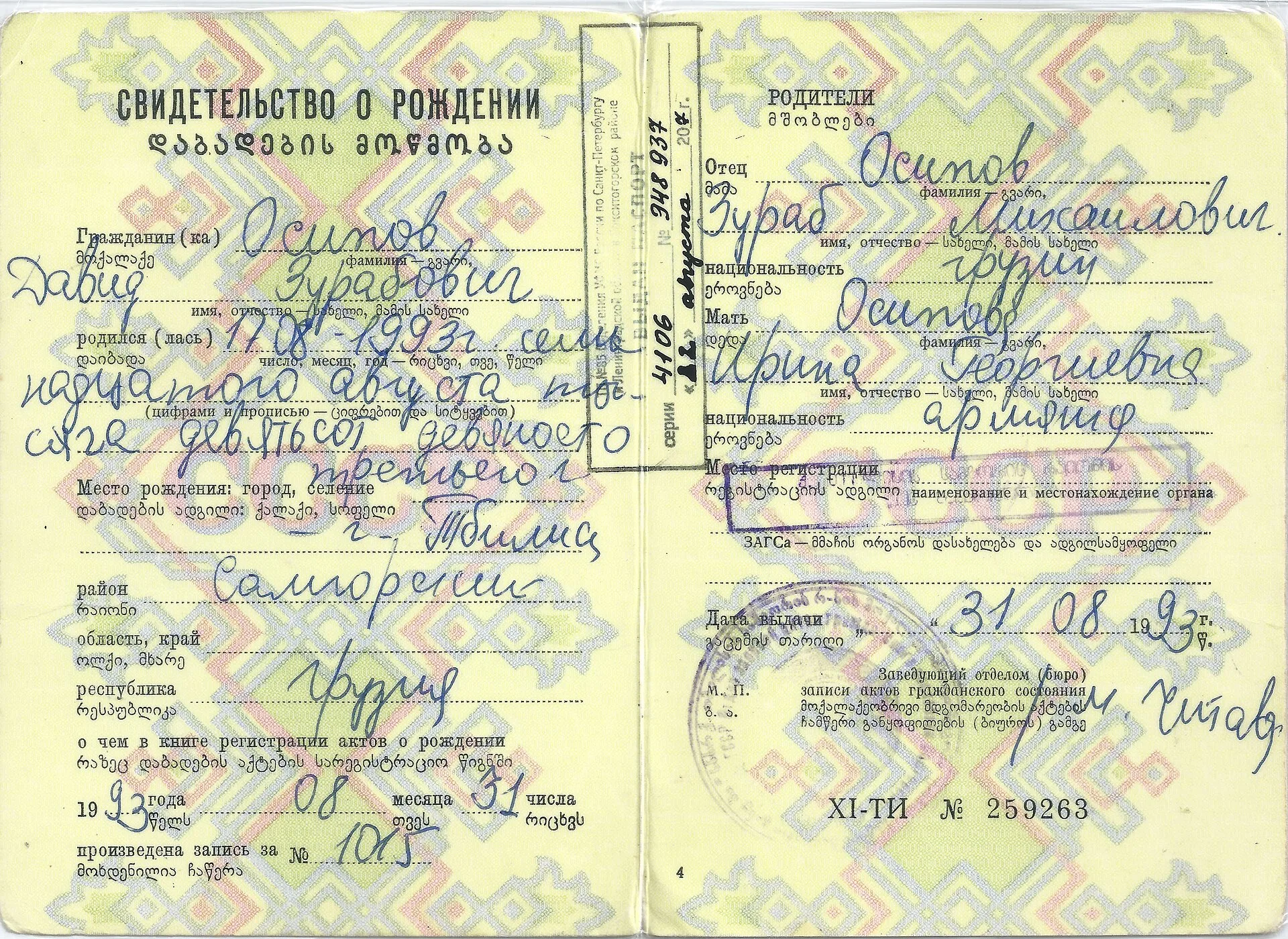
1. A birth happened, on a date, in a place. The evidence is a birth registration or a birth certificate. The record shows what was filed and when, not what a family later repeated.
Eight Claims and Their Evidence
- Birthregistration or certificate
- Parentageas declared on filing
- Marriagemarriage record
- Householdcensus return
- Deathdeath registration
- Estateprobate and estate files
- Survivorsobituary as written
- Stopping pointwritten record gap
2. A person had the parents named on that filing. Birth registration carries parentage as declared at the time. It does not carry biology, and the two are not the same claim.
3. Two adults married, on a date. A marriage record proves the partnership. Certificates from England and Wales have named both fathers and their occupations since 1837. The record says nothing about who the children are.
4. A household looked a certain way on one day. A census return lists who was in the house and how each was related to the head. Ages are frequently rounded. Relationship to the head appears from 1880, so the 1850 count names a household without saying who is related to whom.
5. A person died, on a date, in a place. A death registration gives the date and place, plus the informant's relationship to the deceased. The informant may have guessed at the deceased's birth details.
6. An estate named certain people. Probate and estate files list the relationships the law required someone to prove. Anyone the estate did not concern is absent.
7. A family chose to list certain survivors. An obituary shows survivors as the family wrote them. Estranged, unacknowledged, or simply omitted people are not in it.
8. A line stops here, and this is why. A written stopping point is a finding. "Records for this district do not survive before 1860" tells the next researcher not to repeat your dead end.
That is the honest list. Anything beyond it is inference, and inference needs its reasoning written down.
Each claim has a shelf to search. Civil registration in England and Wales starts on July 1, 1837, Scotland's statutory registers in 1855, and Ireland's in 1864. U.S. state birth registration is patchy before 1915, when the federal birth registration area opened with 10 states.
The 1950 U.S. census opened on April 1, 2022, and the 1960 returns follow in 2032 under the 72-year rule. The Social Security Death Index lists deaths reported to the Social Security Administration, mostly from 1962 onward.
Copies cost money. A state vital records office typically charges $10 to $30 for a certified birth or death certificate.
The General Register Office in England sells certificates for a flat fee, typically around £12. The Find a will service for England and Wales sells a digitized probate document for about £1.50.
FamilySearch is free and carries indexes, census images, and user-contributed trees. Ancestry, Findmypast, and MyHeritage sell subscription plans, typically $20 to $60 a month depending on the collection and the term. The Library of Congress runs Chronicling America, a free newspaper archive covering about 1690 to 1963.
What each record can and cannot carry
Reliable for
- Birth registration (England and Wales from 1837; U.S. state offices)
- Date, place, parentage as declared
- Marriage record (England and Wales certificates from 1837)
- The partnership, its date, ages, fathers
- Death registration and the Social Security Death Index
- Date, place, informant's relationship
- Census return (U.S. federal counts, 1790 to 1950)
- Household composition on one day
- Probate and estate files, and the Find a will service from 1858
- Relationships the law required proved
- Obituary, in Chronicling America or a paid newspaper archive
- Survivors as the family listed them
- Research log or written stopping point
- Why a line ends, and what was already searched
Weak or silent on
- Birth registration (England and Wales from 1837; U.S. state offices)
- Whether the declared parentage is biological
- Marriage record (England and Wales certificates from 1837)
- Children, earlier or later partnerships
- Death registration and the Social Security Death Index
- The deceased's birth facts
- Census return (U.S. federal counts, 1790 to 1950)
- Exact ages
- Probate and estate files, and the Find a will service from 1858
- Anyone the estate did not concern
- Obituary, in Chronicling America or a paid newspaper archive
- Anyone estranged or omitted
- Research log or written stopping point
- Nothing about the ancestor
Much of this is testimony, not observation. A census age was supplied by whoever answered the door. The National Archives guidance on census records explains how a return was collected and what it can be asked to show.
What Each Record Can Carry
Record
- Birth registration
- Date, place, declared parentage
- Marriage record
- Partnership, date, ages, fathers
- Death registration
- Date, place, informant relationship
- Census return
- Household composition one day
- Probate and estate files
- Relationships law required proved
- Obituary
- Survivors as family listed
Reliable for
- Birth registration
- Biological parentage
- Marriage record
- Children, other partnerships
- Death registration
- Deceased's birth facts
- Census return
- Exact ages
- Probate and estate files
- Anyone estate did not concern
- Obituary
- Anyone estranged or omitted
Weak or silent on
- Birth registration
- Marriage record
- Death registration
- Census return
- Probate and estate files
- Obituary
The same-name trap
Two people with the same name, in the same place, in the same decade, produce more wrong trees than any other cause. The defense is refusing to merge until you have separated them.
Hint systems on Ancestry and FamilySearch make merging a single click, which is why the trap catches so many trees.
Track both candidates forward and backward at once. Look for the moment they must be different people: one is recorded somewhere while the other is elsewhere, or one dies before the other's documented child is born.
Until you find that moment, keep two entries. Merging early is nearly impossible to undo, because a merged entry stops looking suspicious. The same discipline applies to a sibling claim, where a shared surname is not a shared parent.
Dates carry more than a number
Distinguish the event date from the recording date. A baptism is not a birth, and a registration filed weeks later is not either.
Watch for calendar changes and for regions that adopted them at different times. Britain and its colonies dropped 11 days when the Gregorian calendar replaced the Julian in 1752.
A date written in one convention and read in another moves by days. A year written before a new-year change moves by a whole year.
Record uncertainty as a range, not a false midpoint. "Between two documented events" is a real statement. A single invented year is not.
Ages are calculated values, and every calculation inherits the errors of its inputs. Store the source date, not the arithmetic.
Read the citation, not the tree
A citation works when a stranger can retrieve the same document. That means the repository or database, the collection, whatever reference the collection uses, and the date you looked. Elizabeth Shown Mills's Evidence Explained is the standard guide to that format.
Then ask whether the creator was positioned to know what the document records. Ask whether you are looking at the original, a photographed copy, a transcript, or an index entry.
Each step away from the primary source adds a chance for error. Indexes are typed by people reading unfamiliar handwriting, and they drop and alter names constantly. Where a database offers the original image, open it.
Mark how confident each link is
A tree that shows every link identically is lying about the ones it is unsure of.
Confidence States for Tree Links
State
- Documented
- A record directly asserts this link
- Inferred
- No single record asserts it, but several together leave no reasonable alternative, and the reasoning is written down
- Reported
- A family account or secondary source says so, and nothing has confirmed it
- Disputed
- Sources conflict and the conflict is unresolved
What it means
- Documented
- Inferred
- Reported
- Disputed
Inferred links are legitimate work, but only when the reasoning travels with them. An inference whose argument has been lost is a guess.
Living people are a different job
Once a tree reaches living people, the constraint stops being evidentiary and becomes ethical. Most record types that make earlier generations tractable are closed for the living, and for good reason.
For a published tree, include living people only where they have publicly acknowledged the relationship. Omit dates and places precise enough to locate someone.
Leave minors out unless a parent has made the relationship public. Even then, include the relationship and nothing else about the child, following the guide to claims about children.
A tree can be complete enough to be dangerous without any single entry being sensitive. Mother's maiden name, birth town, birth year, and a list of relatives is the exact set of facts identity checks are built on. Assembling it accurately is not a defense.
Common questions
Ten public trees agree. Isn't that confirmation?
Not unless they are independent, and they rarely are. One entry gets copied, the copies get copied, and agreement measures popularity rather than accuracy. Check whether they cite anything, and whether they all cite the same thing.
A DNA test contradicts the paper trail. Which is right?
They answer different questions. Paper records document legal and social parentage as declared at the time. Genetic testing addresses biological relatedness. Both can be accurate at once, and the gap is usually a real event in someone's life rather than an error.
Should the tree show adoption?
Show it if the people involved have made it public, and show it as what it is rather than flattening it into biological parentage. If they have not made it public, the relationship still belongs in the tree as parentage, because it is. The adoption itself does not belong to you to disclose.
How much of this applies to a short family section in an article?
All of it, minus the diagram. A sentence naming someone's parents is the same parentage claim as a box with a line, and it needs the same source, held to the standard in the guide to what a public role licenses.
In this guide
- Celebrity family trees: how claim indexes keep contextFamily trees of famous families get flattened into lists. A claim index keeps relationship type, generation, confidence and source for each published entry.
- Family tree charts: what the standard shapes assume and leave outA guide to family tree chart conventions: what pedigree and descendant charts assume, how positional identifiers fail, and how to read someone else's chart.
- Getting family trees privacy right the first timeFamily trees privacy: a blanked entry surrounded by full ones is not anonymous, because its neighbors locate it, and the dead disclose the living beside them.
- Family trees updates: questions to ask before you editA practical guide to family trees updates: what to check before correcting a link, how to version entries, and when to order a vital record.