Costs
Part of Celebrity pregnancies: who, when and why it matters
Celebrity pregnancies rumors: how to handle a claim
Celebrity pregnancies rumors turn a picture into a medical claim fast. Here is how to handle one: the statement to look for, the dates to note, when to wait.
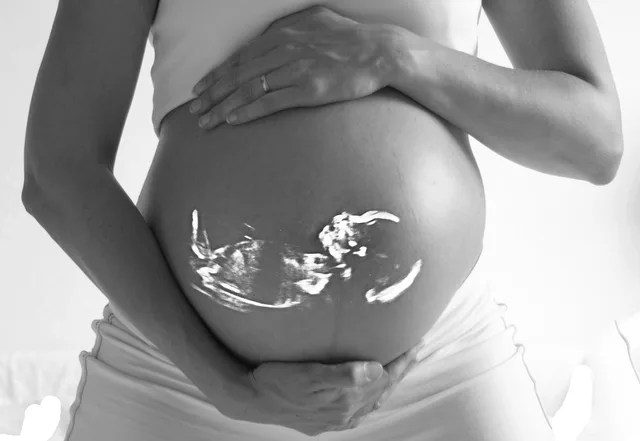
Almost every claim in this genre begins with somebody looking at a picture and deciding what a body means. That is the whole mechanism. There is no leak, no document, and usually no source: there is an image, a reader, and a chain of inference that runs from a garment to a medical conclusion in about a second.
Because the inference feels like observation, the person making it experiences themselves as noticing rather than as guessing. That is what makes celebrity pregnancies rumors hard to argue with and worth taking apart step by step.
What to take away
- Nothing visible about a person establishes a medical fact about them.
- The hedge does not fix the sentence, because the hedge is dropped by whoever copies it next.
- The cost of being wrong falls entirely on the subject, and it falls hardest in the cases where the claim was cruelest.
The observations that are not observations
What it is read as
- A loose garment
- Concealment
- A hand resting somewhere
- A gesture with meaning
- A drink not being held
- Abstention with a cause
- A canceled appearance
- A condition being managed
- Weight change
- A pregnancy
Why the reading fails
- A loose garment
- Clothes are chosen for weather, comfort, and taste
- A hand resting somewhere
- People stand however they stand
- A drink not being held
- There are countless reasons not to hold a drink
- A canceled appearance
- Schedules change constantly and privately
- Weight change
- Bodies change for medical, ordinary, and unhappy reasons
Read down the middle column and notice that every entry is a story the viewer supplied. The left column is what a camera recorded. Nothing crosses from left to right without a reader doing the work, and the reader is not in a position to do it.
What Is Seen vs. Read
What is actually seen
- Loose garment
- Concealment
- Hand resting
- A meaningful gesture
- Drink not held
- Abstention with a cause
- Canceled appearance
- A condition managed
- Weight change
- A pregnancy
What it is read as
- Loose garment
- Hand resting
- Drink not held
- Canceled appearance
- Weight change
The last row deserves its own sentence because it does the most damage.
A visible change in a person's body can follow illness, treatment, grief, or nothing at all. A publication that guesses pregnancy has a good chance of announcing something else entirely to the subject's family before the subject is ready.
Why the hedge does not help
The house style for this material is a modal verb. Sparked speculation. Appeared to. Fueled talk that. The writer believes the modal makes the sentence safe, and inside the article it arguably does.
How a Hedge Disappears
- Original article keeps the modal verb
- Headline drops the modal
- Second site aggregates, cites the first
- Search suggestion has no grammar
- Claim stands alone with a name attached
The sentence leaves the article. A headline drops the modal, a second site aggregates it and treats the first site as the source, and it becomes a search suggestion with no grammar at all.
Three steps later, the qualification is gone, and the claim stands alone with a publication's name attached to it.
This is a known failure mode of attributed speculation. The ethical framework news organizations publish for themselves treats sourcing as what a reader can check, not what a writer can defend, as the Associated Press news values and principles sets out. The Society of Professional Journalists' Code of Ethics asks the same thing: weigh the public's need for information against potential harm.
A hedge that survives only in the original version is not a safeguard. It records that the writer knew better.
The mechanics of a qualification being stripped as material travels are the same ones that turn any paraphrase into a quotation. The hedge is the first thing to go, and what remains reads like a flat statement.
The cost falls on one side
Suppose the guess is right. The publication gains a few days over the family's own announcement and takes the announcement away from them.
Suppose the guess is wrong. There are several ways to be wrong, and they are not equally bad.
- The person is not pregnant and finds their body publicly discussed.
- The person was pregnant and has since lost the pregnancy, and is now asked about it by strangers.
- The person is undergoing treatment for something they have not disclosed.
- The person cannot have children and has been publicly reminded of it.
A publication cannot know which of those it is walking into, which is the actual argument: the downside is unbounded and unknowable, and the upside is a few days of traffic. Guidance from the Eunice Kennedy Shriver National Institute of Child Health and Human Development on how common pregnancy loss is makes clear that the second and third rows are not exotic scenarios invented to win an argument.
A denial is not a resolution
When a subject or a representative denies a rumor, the denial is often treated as the end of the matter, and it is not, in either direction.
A denial goes on the record as a statement, dated and attributed exactly like any other. It does not retroactively unpublish the claim or reach readers who saw the original.
A denial is itself news in this genre. The claim tends to come back inside the coverage of the denial, so the person appears in the story twice — once as the subject and once as the correction.
It also puts the subject in an impossible position. A person who declines to answer is read as confirming. A person who answers accepts the premise that their body is a matter for public comment.
Neither response is available to them without cost. The general point is that a denial is a correction only the readers who see it ever get; it does not reach the audience of the original claim.
What to do when the claim reaches you
If one of these claims reaches you, you are not obliged to believe it, to repeat it, or to spend the day chasing it.
Look for the one thing that would settle the matter: a statement from the person or their representative, on the record. In practice, that means a named publicist, manager or other representative, or a statement posted on the person's own verified account; a wire service such as the Associated Press relaying a named representative's words counts too. An unnamed insider or a friend of the family is not that statement, and a refusal to answer is not either.
Note the date, because a claim resurfacing in six months is usually the same claim, not a new one. Until the family says something themselves, there is nothing new to read, whatever the headline suggests.
If the family does announce, the announcement is the story, and it can be repeated in their words. What may then be written about the resulting child is a much stricter question, and children do not become public property because their parents are famous. The case for waiting until the family speaks is the standard that applies to any confirmation.
Names, siblings and family lines belong to the family's own announcement, not to the rumor that came before it. A baby name, a birth order, a grandparent mentioned for the first time: those details are the family's to release, in their words and on their schedule, and nothing about them is public knowledge until the family makes it so.
Common questions
The rumor is already everywhere. What is the harm in covering it?
Every outlet and account says this, which is how it got everywhere. Repeating it adds durability, search ranking, and the appearance of one more independent source. Being late to a claim that should not have been made is not a failure on anyone's part.
Can we write about the speculation itself rather than the claim?
Sometimes, and it is harder than it sounds. An article about the speculation repeats the claim, indexes it, and usually ends up serving the same reader. It is legitimate only when the speculation itself has become a documented event with consequences worth examining, and even then the subject's body does not need describing.
What if the person has previously discussed the topic publicly?
Then you may quote what they said, and you may not extend it. Having spoken about a subject once is not a standing waiver, and a disclosure made at a moment of their choosing does not license a running commentary afterwards.
Somebody sent us a photograph. Does that change anything?
It changes what you possess, not what you know. A photograph is evidence that an image exists. It is not evidence of a medical fact, and receiving one from a stranger tells you about the stranger's interests rather than about the subject.